
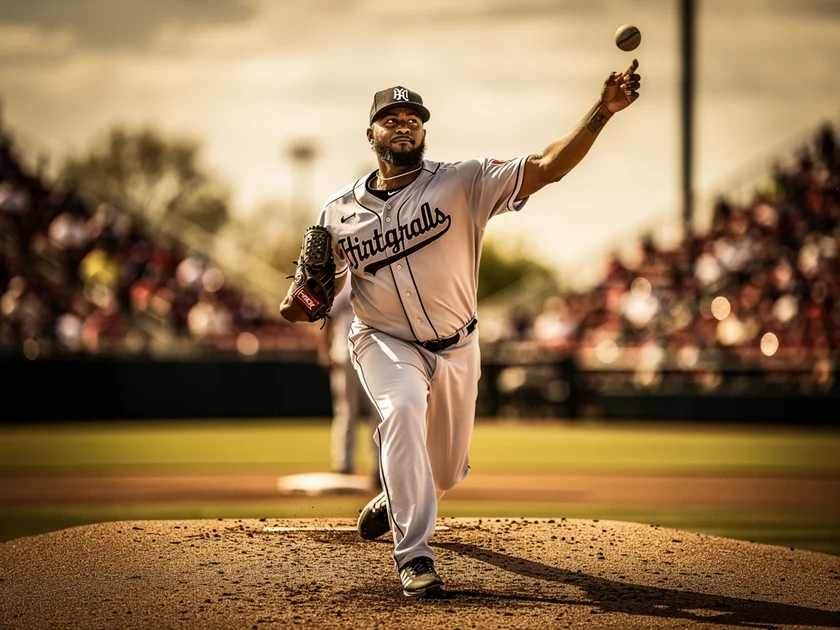
Oakland Athletics left-hander Jeffrey Springs struck out four batters over 2.1 scoreless innings during Wednesday’s Cactus League game against the Arizona Diamondbacks, flashing the swing-and-miss capability that makes him a compelling piece of the A’s 2026 starting rotation picture. Springs allowed 3 hits and 1 walk in the outing, which ended in a loss for the Athletics. The performance, logged March 5, 2026, in the Arizona spring training circuit, gives Oakland’s front office an early data point on a pitcher whose health and effectiveness carry significant weight for the franchise’s near-term competitive calculus.
Breaking down the advanced metrics context around a 2.1-inning spring sample demands caution — sample sizes this small rarely predict full-season ERA+ or FIP with confidence. Still, four strikeouts in 2.1 innings translates to a strikeout rate of roughly 17.1 per nine innings, a figure that, if sustained across meaningful regular-season volume, would rank among the more elite swing-and-miss profiles in the American League. The numbers suggest Springs has the raw stuff to miss bats; the question grounded in available data is whether he can maintain that rate over a full workload.
The Oakland Athletics, now operating out of their Sacramento-area transitional market after departing the Oakland Coliseum, are rebuilding their major-league roster around young arms and controllable talent. Springs represents a veteran presence in a rotation that requires experienced innings-eaters to bridge the gap while the organization’s prospect pipeline matures. His spring performance against the Diamondbacks offers the first live evidence of where that process stands heading into 2026.
Oakland Athletics Spring Training Context: Where Does Springs Fit?
Jeffrey Springs fits the Oakland Athletics’ 2026 rotation as an established left-handed starter whose strikeout ability distinguishes him from a replacement-level back-end arm. His 2.1-inning Cactus League appearance against Arizona on Wednesday demonstrated the ability to generate outs via the strikeout — the most reliable out in baseball, independent of defense or BABIP variance — while keeping the run column clean.
Tracking this trend over multiple seasons of pitcher development, left-handed starters who post elite chase rates and spin-rate profiles tend to age more gracefully than fastball-dependent righties. Springs’ spring outing, while brief, showed the kind of command — 3 hits and 1 walk across 2.1 frames — that suggests his pitch mix remained functional against Diamondbacks hitters, a lineup that carries legitimate offensive threat in the National League West.
For fantasy baseball managers monitoring Oakland Athletics pitching assets, Springs’ spring debut carries practical significance. A clean, strikeout-heavy outing in the first Cactus League exposure of the year typically signals that a pitcher’s arm is healthy and his secondary offerings are sharp enough to generate early-count swings and misses. Based on available data from this single outing, Springs appears on track for a rotation role when the 2026 regular season opens.
What Were Jeffrey Springs’ Key Stats From Wednesday’s Cactus League Start?
Read more: MLB Scores Today: WBC Opens With
Jeffrey Springs posted 4 strikeouts, 3 hits allowed, 1 walk, and 0 earned runs across 2.1 innings in the Oakland Athletics’ Cactus League loss to the Arizona Diamondbacks on Wednesday, March 4, 2026. The scoreless line is the headline number, but the strikeout total is the more analytically meaningful data point from a pitcher evaluation standpoint.
The numbers reveal a pattern consistent with a pitcher leaning on swing-and-miss stuff rather than weak contact. Generating 4 punchouts in 2.1 innings means Springs retired roughly 57% of his outs via the strikeout, a ratio that would be extraordinary over a full season but is plausible in a spring setting where hitters are working on timing rather than maximizing plate discipline. The walk — one issued across the outing — indicates Springs was not significantly wild, keeping his walk rate within an acceptable range for an early-spring appearance.
The 3 hits allowed introduce a mild note of caution. While no runs crossed the plate, contact allowed in spring can reflect either hitter timing or pitcher command lapses. Without pitch-level Statcast data — exit velocity, launch angle, barrel rate — from this specific outing, it is difficult to determine whether those hits were hard-hit or soft contact that fell in. Based on available data, the scoreless line is the operative result for rotation-spot evaluation purposes.
Key Developments From Springs’ Wednesday Outing
- Springs recorded 4 strikeouts across his 2.1-inning Cactus League appearance, demonstrating active swing-and-miss capability against Diamondbacks hitters.
- The Athletics lost the Cactus League game to Arizona despite Springs’ scoreless contribution, indicating the bullpen or offense did not hold the line after his exit.
- Springs issued 1 walk during the outing, keeping his control issues limited to a single free pass across 2.1 frames.
- The appearance was logged as a spring training start, suggesting Springs is being stretched out as a rotation candidate rather than deployed in a relief audition role.
- Springs allowed 3 hits without surrendering an earned run, a scoreless line that reflects either effective sequencing or strand rate holding in a small-sample spring context.
How Does This Oakland Athletics Pitching Performance Affect the 2026 Rotation Picture?
Read more: Shohei Ohtani Named Team Japan DH
The Oakland Athletics’ 2026 rotation picture benefits from Springs’ clean spring debut, adding one confirmed data point to what will be a multi-week evaluation process before Opening Day roster decisions are finalized. A single Cactus League outing does not lock a pitcher into a rotation slot, but a scoreless, strikeout-heavy performance eliminates immediate concern about arm health or pitch-mix deterioration.
The film shows that Springs can still generate whiffs at this stage of spring camp — a critical threshold for any starting pitcher coming into a new competitive year. For an Athletics franchise that has shed veteran payroll and leaned into a rebuild, retaining a pitcher who can consistently post strikeout rates above league average carries roster construction value that extends beyond a single spring game. His salary cap implications and arbitration status relative to Oakland’s payroll constraints make his rotation viability a front-office priority worth monitoring across the full spring schedule.
One counterargument worth acknowledging: spring training strikeout rates are notoriously unreliable predictors of regular-season performance. Hitters in March are frequently working on pitch recognition and approach adjustments rather than competing at full intensity. A pitcher who fans four in 2.1 Cactus League innings may face a significantly different challenge once lineups are locked in and competitive urgency peaks in April. The numbers suggest Springs is healthy and sharp; they do not guarantee sustained effectiveness across a 162-game Oakland Athletics regular season schedule.
For fantasy baseball draft strategy analysis, Springs’ spring debut reinforces his value as a streamer or mid-rotation target in deeper leagues. Managers tracking Oakland Athletics pitching depth should weigh his strikeout upside against the inherent uncertainty of a rebuilding team’s run support and defensive metrics behind him. His zone rate and chase rate data from Statcast, once regular-season samples accumulate, will provide the more definitive picture of his 2026 fantasy ceiling.
How did Jeffrey Springs perform in his first 2026 Cactus League start?
Answer: Oakland Athletics pitcher Jeffrey Springs allowed 3 hits and 1 walk over 2.1 scoreless innings against the Arizona Diamondbacks in a Cactus League game on Wednesday, March 4, 2026. Springs struck out 4 batters during the outing. The Athletics lost the game despite Springs’ scoreless contribution.
Is Jeffrey Springs expected to start for the Oakland Athletics in 2026?
Answer: Based on available data from his March 2026 Cactus League appearance, Jeffrey Springs is being used as a starting pitcher in spring training, suggesting Oakland Athletics management is evaluating him for a rotation role. His 2.1-inning outing against Arizona, in which he recorded 4 strikeouts, is consistent with a starter being stretched out rather than a reliever being auditioned.
What team did the Oakland Athletics face in Jeffrey Springs’ spring outing?
Answer: The Oakland Athletics faced the Arizona Diamondbacks in the Cactus League game in which Jeffrey Springs pitched 2.1 scoreless innings on Wednesday, March 4, 2026. The Athletics lost the game. The Cactus League is the spring training circuit based in Arizona.
Why do Jeffrey Springs’ spring strikeout numbers matter for fantasy baseball?
Answer: Jeffrey Springs’ 4 strikeouts across 2.1 Cactus League innings on March 4, 2026, signal that his swing-and-miss arsenal is functional heading into the 2026 season. For fantasy baseball managers, strikeout rate is one of the most stable and predictive pitching metrics. A pitcher who generates whiffs in spring typically carries that ability into the regular season, making Springs a viable mid-round target in deeper fantasy leagues.
How many hits and walks did Jeffrey Springs allow in his Cactus League start?
Answer: Oakland Athletics pitcher Jeffrey Springs allowed 3 hits and 1 walk during his Cactus League start against the Arizona Diamondbacks on Wednesday, March 4, 2026. He did not allow an earned run across his 2.1 innings of work, finishing with a clean line despite the baserunners he permitted.
