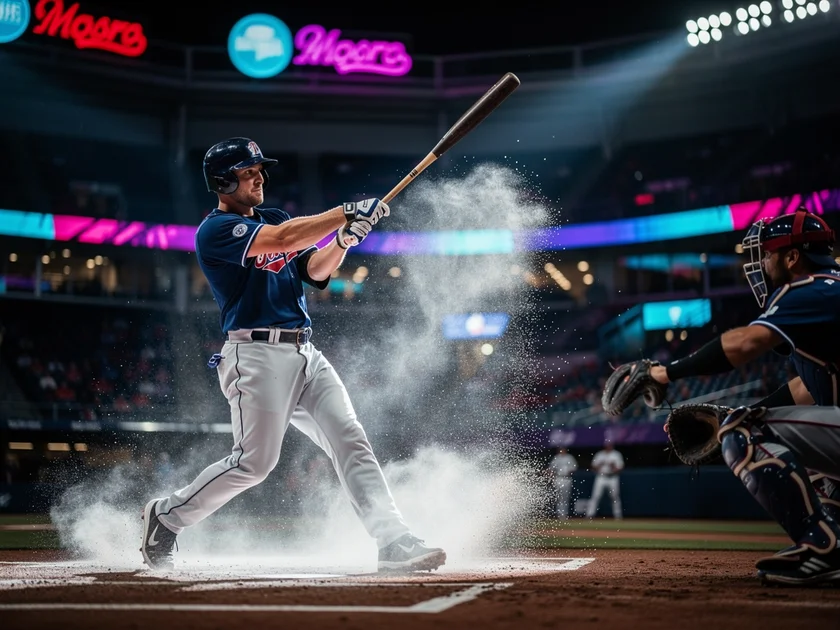
The San Diego Padres are deep into 2026 spring training as March competition builds across the Cactus League. Roster battles are shaping a club that finished last season with World Series ambitions still intact. Center fielder Moises Valdez has drawn notice in the Padres outfield mix this camp, per ESPN player tracking data. The Dodgers currently lead all spring standings at 10-4 (.714).
Spring numbers carry limited weight. Sabermetricians routinely discount Cactus League results given the elevated offense and uneven pitcher workloads. Still, this camp offers real signals about depth, role clarity, and how San Diego’s front office views its 2026 roster. Early at-bat data suggests Petco Park’s spacious layout will again drive pitching-first decisions.
San Diego’s front office has leaned on analytical tools since A.J. Preller rebuilt the club. The Padres carry one of MLB’s largest payrolls, and their salary structure deserves close review heading into a season with genuine October expectations.
Where San Diego Stands in the Division Race
The Padres enter 2026 as the primary challenger to Los Angeles in the NL West. The Dodgers hold a 10-4 spring record (.714) and a one-game lead in early Cactus League play. San Diego’s roster, built around a deep rotation and a lineup capable of posting elite wRC+ numbers, positions the club as the division’s clearest alternative to another Dodger title run.
The NL West is the most analytically complex division in baseball. Los Angeles carries structural advantages in WAR distribution and contract flexibility that San Diego must offset through performance. Colorado sits at 7-6 (.538) in spring play. The other Los Angeles club stands at just 5-9 (.357). That compressed middle creates schedule advantages for whichever contender builds early separation.
A pattern worth tracking: San Diego’s best offensive seasons have aligned with years when the lineup posted a collective OPS+ above 105. Based on roster construction and projected platoon splits, the 2026 squad carries that ceiling. Translating spring projections into regular-season output, though, demands a healthy rotation and disciplined bullpen use across 162 games.
Moises Valdez and the Outfield Picture
Read more: Chicago White Sox Depth Chart Tracker:
Moises Valdez is listed as San Diego’s starting center fielder per ESPN’s current player database. Center field defense is among the most WAR-sensitive spots on the diamond. A below-average defender there can cost a club 8-12 runs per season versus positional average — a gap that shows up clearly in Defensive Runs Saved and Outs Above Average.
Valdez gives the Padres a profile to measure against offensive and defensive benchmarks. Exit velocity, sprint speed, and route efficiency are the three metrics that most reliably predict center field value. A player posting elite sprint speed — above the 90th percentile, roughly 29.5 ft/sec — with average-or-better route efficiency can carry a below-average bat and still produce positive WAR. The reverse — a strong bat paired with poor range — tends to erode fast in Petco Park’s deep gaps.
San Diego’s broader outfield depth strategy involves balancing left-handed and right-handed bats against opposing rotation tendencies. Platoon splits matter in October. The front office has historically prioritized switch-hitters and left-handed bats to counter the division’s concentration of right-handed starters.
Key Developments From Padres Camp in Early March
- Valdez is currently listed as San Diego’s starting center fielder in ESPN’s player database as of March 7, 2026, indicating his role entering the final weeks of camp.
- Los Angeles leads all spring standings at 10-4 (.714), one game ahead of the next-closest club, establishing early division hierarchy.
- Cincinnati sits at 6-5 (.545) and Colorado at 7-6 (.538) in spring play, reflecting a broadly competitive Cactus League field.
- Seattle stands at 4-9 (.308) through early spring games, the worst mark among clubs tracked in the current standings snapshot.
- The 2026 World Baseball Classic runs concurrently with spring training, with Japan, Puerto Rico, and other nations competing — a scheduling factor affecting roster availability across MLB clubs this month.
What the 2026 Season Holds for the Padres
Read more: San Diego Padres: Jackson Merrill 32
San Diego’s path to October runs through sustained rotation health and a lineup that converts barrel rate into actual run production. Petco Park historically favors pitchers who generate weak contact — high spin-rate fastballs and sharp breaking balls that induce soft fly balls into the park’s deep alleys. Any starter posting a FIP below 3.50 with a chase rate above 32% becomes far more valuable in that park context.
Over three seasons, San Diego’s best postseason runs came when the bullpen ERA+ exceeded 115 and the lineup’s BABIP stayed within five points of projected norms. That combination avoids the cold stretches that doom playoff rotations and the unsustainable hot streaks that inflate regular-season records. The 2026 roster carries the pieces for that profile, though Los Angeles’s depth makes the division title a difficult target.
The front office faces concrete decisions on roster moves, arbitration-eligible players, and potential waiver additions before the April opener. San Diego’s aggressive salary structure gives the club flexibility but limits margin for error on underperforming contracts.
One counterpoint: spring records and player database listings reflect organizational intent, not confirmed outcomes. Valdez’s center field listing could shift if a veteran option surfaces or if a defensive adjustment favors a different profile. The numbers suggest San Diego’s front office has a clear vision — but decisions made in March carry real uncertainty across a full season.
Who is the San Diego Padres starting center fielder in 2026?
Moises Valdez is listed as San Diego’s starting center fielder in ESPN’s current player database as of March 7, 2026. Spring competition can shift roster designations before the regular season opener, so the Padres’ final center field decision may not be confirmed until late March.
How do the Padres compare to the Dodgers in the NL West?
Los Angeles leads spring training standings at 10-4 (.714), one game ahead of the field. San Diego is widely viewed as the Dodgers’ primary NL West rival based on roster construction, payroll investment, and recent postseason history. Early spring records carry limited predictive value for regular-season outcomes.
What advanced metrics matter most for evaluating the Padres roster?
For San Diego’s roster evaluation, WAR distribution across positions, FIP and ERA+ for pitchers, and wRC+ for hitters provide the most reliable signals. Petco Park’s spacious dimensions amplify the value of contact-suppressing pitchers and center field defense, making Outs Above Average and Defensive Runs Saved especially relevant for outfield decisions.
How does the 2026 World Baseball Classic affect Padres spring training?
The 2026 World Baseball Classic runs at the same time as spring training, affecting roster availability across MLB clubs. Players representing countries including Japan and Puerto Rico miss portions of Cactus League camp, which can delay development timelines and complicate manager decisions on final roster construction heading into April.