
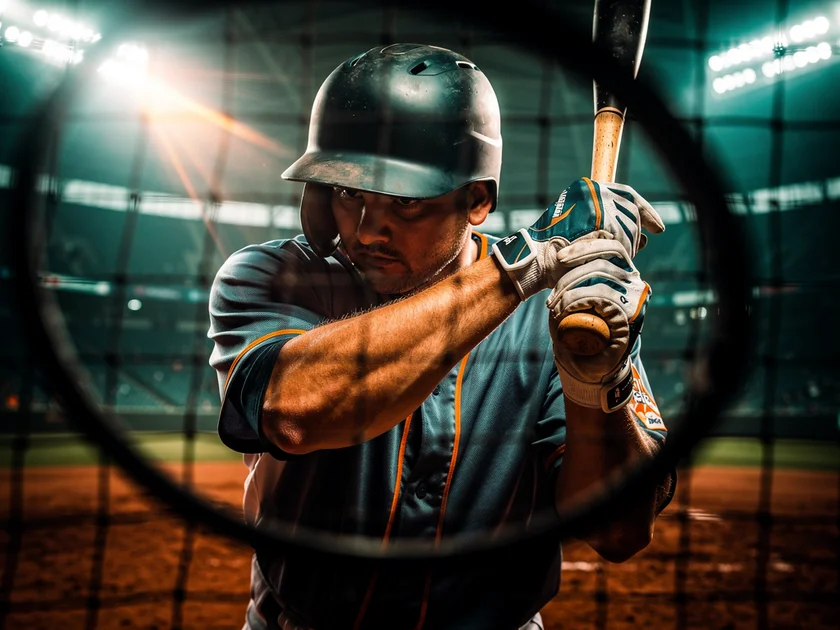
Vladimir Guerrero Jr. stands as the organizational benchmark for elite player development within the Toronto Blue Jays system, cited alongside prospects Addison Barger and Mason Fluharty as evidence of the club’s player development philosophy. MLB.com’s updated 2026 Top 30 prospects list for Toronto places Vladimir Guerrero Jr.’s trajectory at the center of how the front office evaluates what its pipeline can realistically produce.
Toronto’s system does not rank among the top five in baseball heading into 2026. That standing is a direct consequence of trading top pitching talent to strengthen the big-league club — not a signal of developmental failure.
MLB.com’s analysis states those traded pitchers, had they stayed in Toronto, would have pushed the system into the national top 10. That single data point reframes the current ranking entirely. It separates organizational intent from organizational capacity — two things that are easy to conflate when reading a prospect list at face value.
How Vladimir Guerrero Jr. Shapes Toronto’s Development Standard
Vladimir Guerrero Jr. represents what the Blue Jays want their farm to produce at the highest level. The organization explicitly names developing players of his caliber as the primary goal of the system. Pitching prospect Yesavage is also cited alongside Vladimir Guerrero Jr. as a benchmark for elite internal development.
Every current prospect evaluation in Toronto operates against that standard. The gap between Guerrero-tier production and functional depth contributors is wide — but the Blue Jays treat both tiers as deliberate outputs, not accidents.
MLB.com’s 2026 farm breakdown describes two distinct development tracks running simultaneously within the organization. The first targets star production — the Vladimir Guerrero Jr. and Yesavage tier. The second builds roster flexibility through contributors like Barger, Fluharty, and Braydon Fisher.
Fisher, acquired from the Los Angeles Dodgers, was converted into a bullpen asset — cited by MLB.com as a concrete example of Toronto’s ability to extract value from acquired players, not just homegrown ones. That distinction matters when assessing how broadly the organization defines player development.
What the 2026 Rankings Actually Reveal
Read more: Minnesota Twins Opening Day Roster Projection
The Blue Jays’ 2026 Top 30 list, as updated by MLB.com, reflects an organization that has moved aggressively from the top of its prospect pool to serve the big-league roster. The numbers reveal three verifiable data points that anchor that conclusion.
First, the system sits outside the top five nationally. Second, MLB.com projects it would land in the top 10 if previously traded pitchers had remained with Toronto. Third, prospect Sanchez — first name not specified in available reporting — is identified as a player the club holds in particularly high internal regard, with MLB.com writing, “The Blue Jays are very high on Sanchez, and they should be”.
That level of organizational conviction echoes early internal language surrounding Vladimir Guerrero Jr. before his major league debut. It does not guarantee a similar outcome. But it signals where Toronto’s front office is directing its attention within the current system.
The Risk Built Into Toronto’s Prospect Strategy
Trading repeatedly from the top of a system carries compounding risk. An organization that converts elite prospect capital into big-league assets must eventually replenish the upper tier — or the model collapses under its own logic.
The Blue Jays are at that inflection point. Their current system has surrendered substantial prospect capital to the major league club. Barger and Fluharty represent the depth layer that remains. Sanchez represents the next potential upper-tier asset.
The pipeline between those two tiers — the players who bridge depth and stardom — is where the real test of this strategy sits. Film on younger arms and the club’s draft approach will determine whether that bridge holds through 2026 and into the offseason.
MLB.com’s five-storyline breakdown of Toronto’s farm does not characterize the system as broken. It characterizes it as depleted by design. That framing gives the front office credit for intent while leaving open whether execution can sustain the model long-term.
Key Developments in Toronto’s 2026 Prospect Landscape
Read more: MLB Fantasy Baseball 2026: Shane Drohan
- Toronto’s farm system ranks outside the top five nationally in 2026, a direct result of trading elite pitching talent to bolster the active roster.
- MLB.com states the system would crack the top 10 if those traded pitchers had remained in the organization.
- Prospect Sanchez is identified as a player the Blue Jays hold in high internal regard within the updated 2026 rankings, though his first name is not specified in available reporting.
- Braydon Fisher, obtained from the Dodgers, was developed into a bullpen contributor and is cited as proof of Toronto’s capacity to add value to acquired players.
- Addison Barger and Mason Fluharty are named alongside Vladimir Guerrero Jr. as illustrations of how the Blue Jays’ development philosophy spans both elite and depth tiers.
Toronto’s Prospect Pipeline: A Self-Contained Summary
The Toronto Blue Jays enter 2026 with a farm system ranked outside the national top five, per MLB.com’s updated Top 30 prospect list. That standing reflects a deliberate front-office strategy: trading elite pitching talent to strengthen the major league roster. MLB.com notes the system would sit in the top 10 nationally if those arms had stayed.
Vladimir Guerrero Jr. serves as the organizational benchmark for elite development, with Yesavage cited alongside him at that tier. Prospect Sanchez is identified as the next player drawing strong internal confidence, though his first name does not appear in available reporting. Braydon Fisher, obtained from the Dodgers, was shaped into a bullpen contributor — one of three named examples of Toronto’s dual-track model, which also includes Addison Barger and Mason Fluharty. The system’s current depth reflects trade activity, not developmental stagnation.
Why is Vladimir Guerrero Jr. referenced in Blue Jays prospect discussions?
MLB.com cites Vladimir Guerrero Jr. as the organizational benchmark for elite player development within the Toronto system. The front office names developing players of his caliber as the primary goal of the farm, using his trajectory alongside pitcher Yesavage as the standard against which current prospects are evaluated.
Where does the Toronto Blue Jays farm system rank in 2026?
Toronto’s farm system does not rank among the top five organizations in baseball heading into 2026, per MLB.com’s updated prospect rankings. MLB.com notes the system would rank in the top 10 nationally if the Blue Jays had not traded multiple top pitching prospects to strengthen the major league roster.
Who is the top Blue Jays prospect to watch in 2026?
MLB.com’s 2026 Blue Jays analysis highlights a player identified only as Sanchez as a prospect the organization holds in particularly high internal regard. The report states, “The Blue Jays are very high on Sanchez, and they should be,” though his first name is not specified in available reporting.
How have the Blue Jays used their farm system in recent trades?
Toronto has traded multiple top pitching prospects to serve the active roster, according to MLB.com’s 2026 farm system analysis. MLB.com states those pitchers, had they remained, would have pushed the system into the national top 10. The club also acquired Braydon Fisher from the Dodgers and developed him into a bullpen contributor.
What players does the Blue Jays’ development model produce beyond stars like Vladimir Guerrero Jr.?
Beyond elite prospects like Vladimir Guerrero Jr., Toronto’s development model produces functional depth contributors. MLB.com names Addison Barger, Mason Fluharty, and Braydon Fisher as players who provide roster value without reaching star-level status. Fisher was obtained from the Dodgers and shaped into a solid bullpen arm, illustrating the organization’s ability to develop acquired talent.
